Quality issues related to raw materials and the production process:
1. Uneven lawn color and color variation
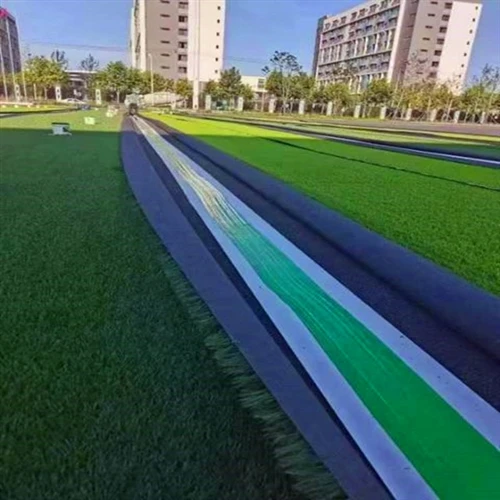
Color discrepancies arise when grass fibers of different color batches are processed into a lawn and installed on a single field.
Ensuring consistent thickness and uniform color across every batch of grass fiber is a technically demanding task; fiber produced using equipment that fails to meet technical standards often exhibits color variation issues.
2. Significant and uneven fading upon exposure to sunlight
UV stability and color fastness are critical metrics for evaluating artificial turf.
3. Fiber shedding or tearing
These issues often stem from insufficient backing strength and abrasion resistance. The durability of the backing-which must withstand corrosion, aging, and wear from minor shifting over time-is a key factor in overall turf quality.
4. Fiber shedding issues
These can also be caused by uneven coating application, immature coating processes, or low fiber abrasion resistance. Fiber shedding is a particular concern for young athletes, as it can impact their health.
5. Lack of luster, high static electricity, and a "draggy" feel
Anti-static properties and luster are key areas of competition for artificial turf products, as they influence the friction coefficient and the ultimate athletic performance. As with other products, the quality of artificial turf is primarily determined by the choice of raw materials (such as fibers and backing) and the maturity and stability of post-processing techniques like coating application.